
150 Cubic Foot Tank
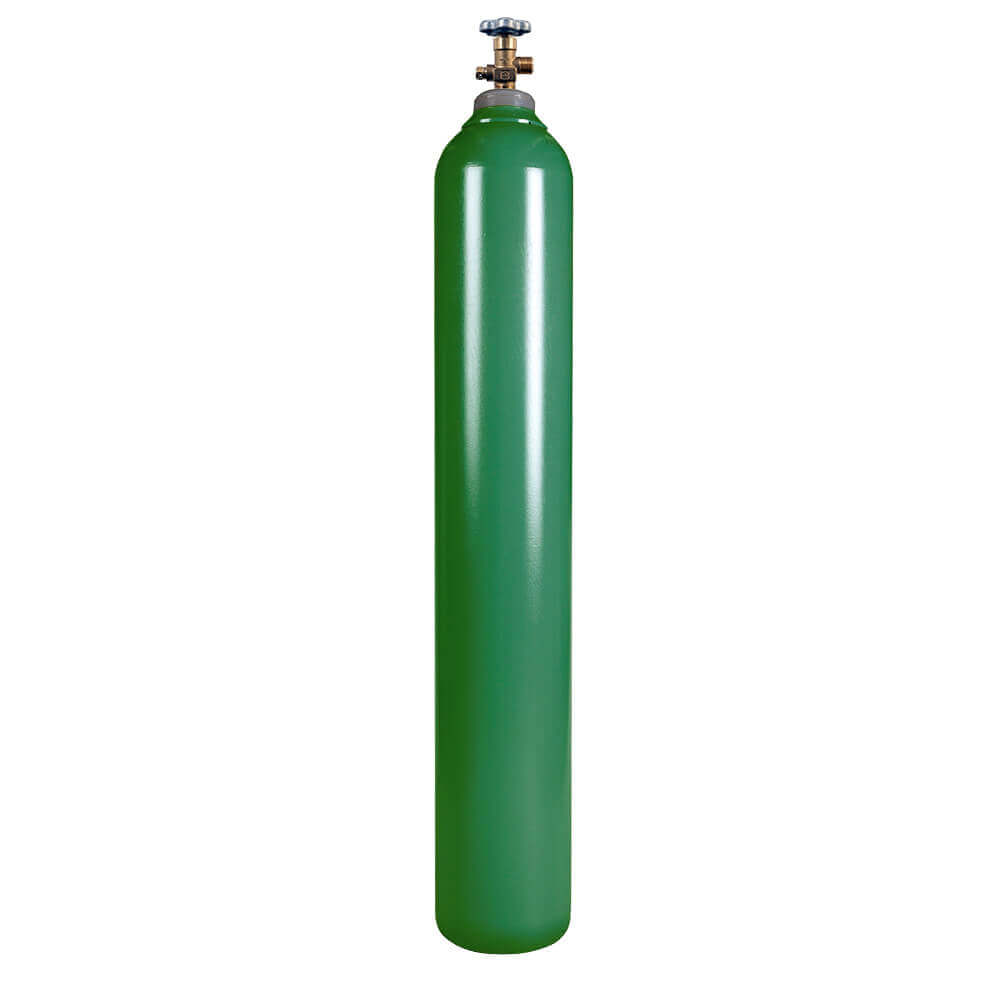
New 150 cuft Steel Oxygen Cylinder
FREQUENTLY ASKED QUESTIONS
▼ What is the 150 cu ft steel oxygen cylinder best used for?
The 150 cu ft steel oxygen cylinder is designed for industrial oxygen service in welding, cutting, and fabrication applications.
With a nominal capacity of 150 cubic feet at standard conditions and a typical 2015 PSI service pressure, this cylinder provides a mid-to-large-size option for shops that need extended runtime without stepping up to the largest 250–300 cu ft cylinders. It is commonly paired with acetylene for oxy-fuel cutting or used with other fuel gases in fabrication environments.
This size is a practical choice for small to mid-sized fabrication shops, mobile welders, maintenance departments, and industrial facilities that want a balance between capacity and manageable height and weight.
▼ Who should choose a 150 cu ft oxygen cylinder instead of a smaller size?
A 150 cu ft cylinder is a strong fit for businesses that need longer operating time between fills but do not want the height and weight of a 250–300 cu ft cylinder.
Compared to 80 or 125 cu ft options, the 150 cu ft size reduces refill frequency, which helps minimize downtime and trips to the gas supplier. For shops running daily cutting or heating operations, that added capacity can improve workflow efficiency.
Customers should evaluate usage rate, available storage space, and transport capability when selecting a size. If unsure, Gas Cylinder Source recommends sharing application details to confirm the best fit.
▼ Is this cylinder suitable for medical oxygen use?
No. This cylinder is configured for industrial oxygen service with a CGA540 valve.
Medical oxygen cylinders typically use CGA870 post valves or other medical-specific configurations and must meet additional regulatory and filling requirements. Industrial CGA540 valves are standard for oxygen regulators used in welding and cutting.
Customers requiring medical oxygen service should select a cylinder specifically configured and labeled for medical use.
▼ What are the key specifications of this 150 cu ft steel oxygen cylinder?
This cylinder is a high-pressure steel oxygen cylinder rated to approximately 2015 PSI service pressure under DOT-3AA specifications.
Typical specifications include:
- Capacity: 150 cu ft (nominal at standard conditions)
- Service Pressure: 2015 PSI
- Material: High-strength steel
- Valve: CGA540 oxygen valve
- Certification: DOT/TC compliant
- Condition: New cylinder
- Ships empty
Dimensions and tare weight may vary slightly by manufacturer but remain within standard tolerances.
▼ What does DOT-3AA mean for this oxygen cylinder?
DOT-3AA indicates that the cylinder meets U.S. Department of Transportation specifications for seamless high-pressure steel cylinders.
This designation confirms that the cylinder is manufactured, tested, and marked in accordance with federal standards for pressure vessels used in compressed gas service. It also establishes the hydrostatic testing and recertification requirements applicable to this type of cylinder.
All cylinders from Gas Cylinder Source meet or exceed current DOT and TC requirements for safe transport and use.
▼ How often does a 150 cu ft oxygen cylinder require hydrostatic testing?
Most high-pressure steel oxygen cylinders under DOT-3AA require hydrostatic testing at 10-year intervals, unless otherwise stamped on the cylinder shoulder.
Hydrostatic testing verifies structural integrity and safe pressure retention. The required retest date is permanently marked on the cylinder. Customers are responsible for ensuring the cylinder remains within its valid test period.
Using a cylinder past its required retest date is unsafe and not compliant with DOT regulations.
▼ Is steel the right material for my oxygen cylinder?
Steel cylinders are durable, economical, and well-suited for stationary or shop-based use.
Compared to aluminum, steel cylinders typically have a lower initial purchase cost and excellent long-term durability in controlled shop environments. However, they are heavier and may not be ideal for applications requiring frequent transport.
For portable applications or humid environments, aluminum may offer advantages in weight and corrosion resistance.
▼ What regulator fits the CGA540 valve on this cylinder?
This cylinder requires a regulator designed for oxygen service with a CGA540 inlet connection.
CGA540 is the industry standard for industrial oxygen cylinders in the United States. Welding and cutting regulators labeled for oxygen with CGA540 compatibility will connect directly to this valve.
Always confirm regulator compatibility before use, and never attempt to modify valve outlets or use adapters not approved for oxygen service.
▼ Can this cylinder be used with oxy-acetylene cutting setups?
Yes. This 150 cu ft oxygen cylinder is commonly paired with acetylene cylinders for oxy-fuel cutting and heating applications.
In a standard oxy-acetylene setup, oxygen is supplied through a CGA540 regulator and acetylene through a CGA510 regulator. Together, they provide the flame characteristics required for cutting, brazing, and heating.
Ensure hoses, regulators, and torches are rated and maintained for safe oxygen and fuel gas service.
▼ Does the cylinder come filled with oxygen?
No. All cylinders ship empty for safety and regulatory compliance.
Customers must have the cylinder filled by a qualified local gas supplier that can support industrial oxygen service. Shipping filled high-pressure oxygen cylinders via common carrier is not permitted under standard regulations.
Always verify that your supplier will fill customer-owned cylinders before purchase.
▼ Can this cylinder be exchanged at my local gas supplier?
Many local gas suppliers will fill or exchange customer-owned DOT-3AA oxygen cylinders, but policies vary by provider.
Some suppliers exchange only their branded rental cylinders, while others refill customer-owned bottles. It is the customer’s responsibility to confirm the fill and exchange policies in advance.
Providing the DOT rating, size (150 cu ft), and CGA540 valve specification will help your supplier confirm compatibility
▼ How tall and heavy is a 150 cu ft steel oxygen cylinder?
A 150 cu ft steel oxygen cylinder is a tall, high-pressure cylinder that requires proper securing during storage and transport.
Exact height and tare weight vary slightly by manufacturer, but this size is typically manageable in shop environments using cylinder carts or wall chains. Due to its weight, it is not considered a lightweight portable option.
Always secure cylinders upright with chains or straps to prevent tipping.
▼ Is this cylinder suitable for mobile welding work?
It can be used for mobile welding, but weight and height should be taken into account.
For truck-based or trailer-based mobile setups, the 150 cu ft size provides good capacity for field work while remaining more manageable than 250–300 cu ft cylinders. However, operators must use proper cylinder racks and secure transport methods.
If frequent hand lifting is required, a smaller cylinder may be more practical.
▼ Does the exterior finish or manufacturer vary?
Yes. Cylinders may be sourced from multiple approved manufacturers.
Exterior finish details, such as dome style or paint variations, may differ slightly, but all cylinders meet the same DOT-3AA specifications and oxygen service requirements. Performance, safety, and certification standards remain consistent.
Specifications stay within accepted tolerances.
▼ What is included with the 150 cu ft steel oxygen cylinder?
The purchase includes one new 150 cu ft steel oxygen cylinder with a CGA540 valve installed.
The cylinder ships empty and is ready for filling by a qualified oxygen supplier. Regulators, caps (if required separately), carts, and other accessories are sold separately unless otherwise specified.
Customers should confirm they have the correct oxygen regulator and safety equipment before operation.
▼ How does this cylinder compare to renting from a traditional gas supplier?
Purchasing this cylinder allows you to own the asset outright and avoid ongoing rental fees.
Traditional suppliers often charge monthly cylinder rental fees. Ownership eliminates those recurring costs and provides long-term asset control. For shops running multiple cylinders, this can represent meaningful annual savings.
However, customers must arrange local filling and ensure compliance with testing and handling requirements.
▼ How does a 150 cu ft cylinder compare to a 250 or 300 cu ft oxygen cylinder?
A 150 cu ft cylinder offers lower height and weight than 250–300 cu ft cylinders while still providing extended runtime compared to 80–125 cu ft sizes.
Larger cylinders reduce refill frequency further but require more storage space and are heavier to transport. The 150 cu ft option is often considered a practical middle-ground for many fabrication environments.
Selection should be based on consumption rate, available space, and handling capabilities.
▼ What safety precautions apply to this oxygen cylinder?
This cylinder must be handled, stored, and filled in accordance with DOT, CGA, and OSHA guidelines.
Key safety practices include:
- Store upright and secured
- Keep away from heat sources above 125°F
- Use only oxygen-rated regulators and fittings
- Never fill with a gas other than oxygen
- Do not remove or modify the valve
Improper handling of compressed gas cylinders can result in serious injury or property damage. Always follow applicable local codes and work with qualified gas suppliers.