
40 Cubic Foot Cylinder
FREQUENTLY ASKED QUESTIONS
▼ What size is an acetylene B tank?
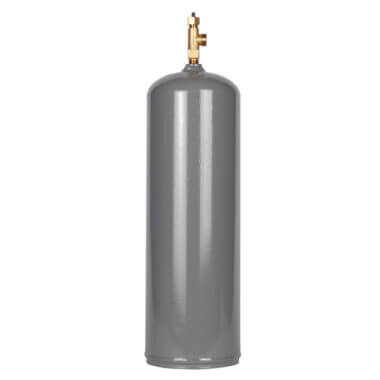
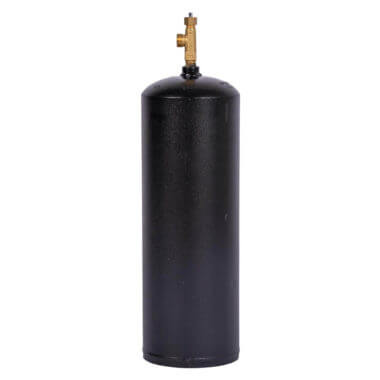
A “B” tank is a size designation rather than a measurement, and it refers to a compact acetylene cylinder holding roughly 40 cubic feet of gas. It is the size most often chosen for portable brazing and soldering rigs. Exact height, diameter and weight for this cylinder are listed in the specifications on this page.
▼ What acetylene tank sizes are available, and where does a B tank fit?
Acetylene cylinders run through a lettered range from small MC bottles up through B, and then into larger numbered sizes such as 75 cf, 145 cf and above. The MC is the smallest common portable, the B is the next step up, and the larger sizes are shop and production bottles. A B tank is the usual choice where the outfit has to be carried between jobs.
▼ What is the difference between an MC tank and a B tank?
Both are portable acetylene cylinders; the B simply holds more gas and is correspondingly taller and heavier. An MC suits short jobs and the smallest torch kits, while a B gives meaningfully longer run time for the same portability class. Both are commonly paired with a small oxygen cylinder in a cutting or brazing outfit.
▼ How long does a B acetylene tank last?
Run time is set by the torch tip and the job, not by the cylinder. Light soldering and brazing draw very little gas and can run for hours, while cutting consumes far more. As a general rule acetylene is consumed more slowly than the oxygen it is paired with, which is why oxygen bottles in a set are usually larger.
▼ Is a B tank the right size for soldering and brazing?
For most soldering and brazing work a B tank is a good fit, giving useful run time without the bulk of a shop cylinder. Very occasional users sometimes prefer a smaller MC, while anyone brazing daily tends to move up to reduce refill trips. Portability is usually the deciding factor.
▼ What valve and regulator does an acetylene B tank use?
Acetylene cylinders use a dedicated acetylene connection that is not interchangeable with oxygen or inert gas fittings, and the specific valve fitted to this cylinder is listed on this page. Check the stated valve designation on this page against your regulator before ordering. Never force or adapt a regulator onto an acetylene valve.
▼ Why must an acetylene cylinder always be used and stored upright?
Acetylene cylinders are not hollow: they are packed with a porous filler saturated with acetone, which holds the acetylene safely in solution. If the cylinder is laid down, liquid acetone can reach the valve and be drawn into the regulator and hose, damaging equipment and creating a hazard. If a cylinder has been on its side, stand it upright for a substantial period before use.
▼ Does the acetylene tank arrive filled?
No. All cylinders ship empty for transport safety and must be filled by a qualified acetylene supplier before use. Acetylene filling is a slow, specialized process because the gas is dissolved into the cylinder’s filler rather than simply compressed. Plan for that when arranging a first fill.
▼ What is the maximum safe withdrawal rate from a B acetylene tank?
Acetylene should never be drawn faster than roughly one seventh of the cylinder’s capacity per hour, because drawing too quickly pulls acetone out with the gas and can starve the flame. On a small cylinder this limit is reached sooner than most users expect. If your torch demands more, use a larger cylinder or manifold two together rather than over-drawing one.
▼ Do I own this acetylene cylinder or is it a rental?
You own it outright once purchased, with no rental contract and no ongoing fees. Acetylene is a category where rental is common, so ownership removes a recurring charge that continues whether or not the bottle is used. Keep your purchase record and the collar date for exchange.
▼ Can my local supplier refill a B acetylene tank?
Yes, provided they handle acetylene and the requalification date is current. Not every welding supplier fills acetylene on site, since it requires specific equipment, so check locally before buying. Many suppliers operate an exchange rather than filling your cylinder while you wait.
▼ What oxygen cylinder pairs with a B acetylene tank?
For oxy-acetylene work the oxygen bottle is normally the larger of the pair, because oxygen is consumed several times faster than acetylene on the same job. A B acetylene tank is commonly paired with an oxygen cylinder in the 40 to 80 cubic foot range for portable work. Gas Cylinder Source sells matched oxy-acetylene sets if you want both together.
▼ What safety equipment should be used with an acetylene cylinder?
Flashback arrestors and check valves on both the fuel and oxygen lines are strongly recommended, along with hoses and a torch rated for oxy-fuel service. Keep the cylinder upright and secured, and fit the valve protection whenever the regulator is off. Never use oil or grease on any oxy-fuel connection.
▼ When does an acetylene cylinder need requalification?
It is requalified on a set DOT interval, with the last test date stamped into the collar, and a supplier reads that date before filling. Acetylene cylinders are also inspected for the condition of the internal filler as part of that process. An out-of-date cylinder will be refused.
▼ How much does it cost to fill a B acetylene tank?
Fill pricing is set by your local supplier and varies by region, and because you own this cylinder you can compare prices between suppliers rather than paying rental plus fill. Buyers commonly find the per-fill cost drops over time against a rental arrangement. Ask about exchange as well as fill, since some suppliers only exchange.