
Inert Gases

FREQUENTLY ASKED QUESTIONS
▼ Is there a used or lower-cost option for a nitrogen cylinder?
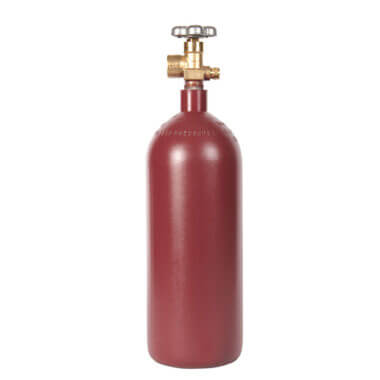
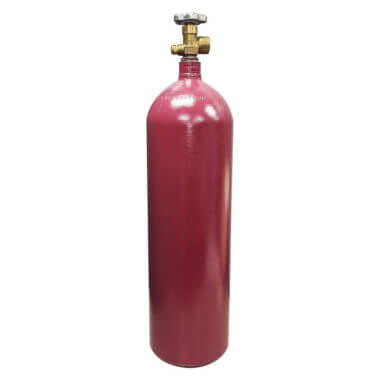
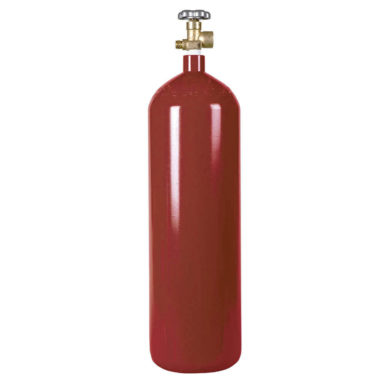
Yes, and this is it. A recertified cylinder is a previously used cylinder that has been inspected and hydrostatically retested by an authorized facility and passed, then returned to service with a current test date. It costs less than new while meeting the same requalification standard, which is what suppliers check before filling.
▼ Does a nitrogen cylinder have to be new to be safe or fillable?
No. What matters is the requalification date stamped into the collar, not the age of the cylinder. Suppliers apply exactly the same check to new and recertified cylinders, and will refuse either one if the date has lapsed. A recertified cylinder with a current stamp is filled exactly like a new one.
▼ Can a 20 cu ft nitrogen tank be used for HVAC pressure testing and purging?
Yes, and it is one of the most common choices for that work. The compact size carries easily to a rooftop or mechanical room, and dry nitrogen will not introduce moisture into refrigerant lines. Pair it with a high-pressure nitrogen regulator rated for your required test pressure.
▼ What are the dimensions of a 20 cu ft nitrogen cylinder?
Height, diameter and empty weight are listed in the specifications on this page. As a class, 20 cubic feet is the smallest common service size, light enough to carry by hand and to fit in a van or under a bench. That portability is the main reason to choose it over a 60 or 125 cu ft bottle.
▼ How long does a 20 cu ft nitrogen tank last?
For intermittent work such as HVAC pressure tests, a 20 cu ft bottle covers many jobs, because each test uses only a small amount of gas. Continuous purging or any steady draw empties it far more quickly. Watch the regulator gauge and refill before it approaches empty.
▼ Is it better to own a nitrogen cylinder or use an exchange program?
Owning removes recurring rental charges and lets you refill at any qualified supplier rather than being tied to one vendor, which is usually cheaper for anyone using nitrogen regularly. Exchange can be more convenient for very occasional use. A recertified cylinder lowers the cost of switching to ownership.
▼ What valve does this cylinder use and what regulator fits?
It comes with a CGA580 valve, the standard inert-gas connection. Any CGA580 nitrogen regulator threads on directly. For pressure testing choose a high-pressure regulator that reaches your test pressure rather than a low-pressure flowmeter, which will not.
▼ Does the nitrogen cylinder arrive filled?
No. All cylinders ship empty for transport safety and must be filled before use. Any welding or industrial gas supplier can fill it with nitrogen to the marked service pressure. Specify a purity grade if your application requires one.
▼ Can this cylinder be used for brazing purge or tire inflation?
Yes. Dry nitrogen is used to purge lines during brazing so the joint forms cleanly without oxidation, and for high-quality tire inflation where a dry, stable gas is wanted. Use a regulator suited to the pressure each task requires. The same cylinder serves both.
▼ Is a nitrogen tank the same as a nitrogen cylinder?
Yes. “Tank”, “cylinder” and “bottle” are used interchangeably for a steel vessel holding compressed nitrogen; the words differ by habit rather than by product. This is a 20 cubic foot nitrogen cylinder with a CGA580 connection whichever term your supplier uses.
▼ Can my local gas supplier refill a recertified 20 cu ft cylinder?
Yes, provided the requalification date is current. The CGA580 connection is standard and this is a routine fill. The supplier reads the collar stamp before filling, exactly as they would for a new cylinder.
▼ When will this cylinder next need requalification?
High-pressure steel cylinders are requalified on a set DOT interval from the last test date stamped on the collar. Because this cylinder has just been recertified, it enters service with a current date and a full interval ahead. Check the stamp on arrival so you know the date.
▼ How should a small nitrogen cylinder be stored and transported?
Even a small high-pressure cylinder should be secured upright in transit and never left loose in a vehicle, since a sheared valve on a pressurized bottle is dangerous. Store it upright, out of direct heat and away from ignition sources, with the valve protection fitted when the regulator is off. Keep it upright even when empty.