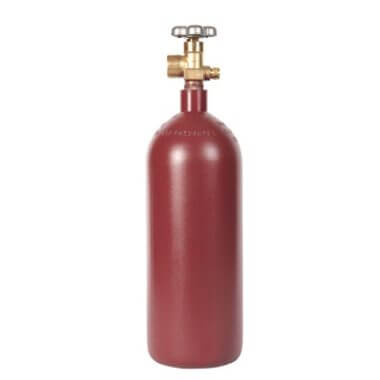
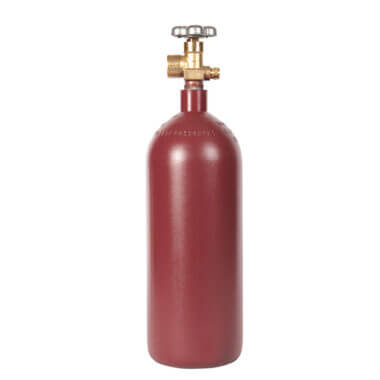
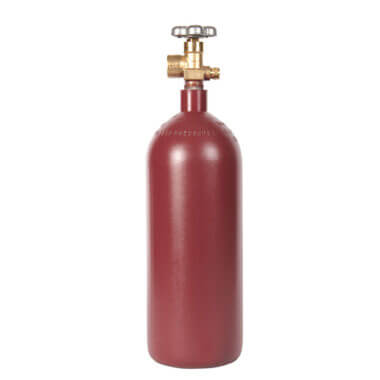
A 20 cf argon cylinder gives roughly 40 to 60 minutes of continuous TIG welding at a typical 15 to 20 CFH flow rate. Most hobby welders get several sessions from one fill because the torch is not flowing gas the entire time. Raising the flow rate above 20 CFH burns gas quickly without improving the weld.
A 20 cf tank suits light, occasional TIG and MIG work such as small repairs, tubing, and hobby fabrication. Anyone welding for more than an hour at a time is usually better served by an 80 cf or 125 cf argon cylinder, simply to cut down the number of refill trips. The tank size does not affect weld quality, only how often it needs filling.

Yes. Because this cylinder is purchased outright rather than leased, it can be refilled or exchanged at most welding gas suppliers in the United States. Ownership also means there are no ongoing rental or demurrage charges, which is the main cost difference between owning and leasing.
There is no difference; the two words describe the same product. “Tank” is the more common term in everyday search and conversation, while “cylinder” is the formal industry and DOT term. Suppliers and specification sheets normally use “cylinder”.
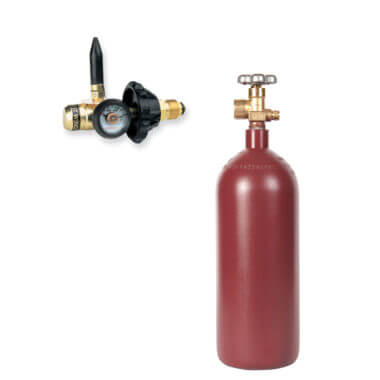
No, the regulator is a separate purchase. This cylinder has a CGA580 valve, so it requires a regulator with a matching CGA580 inlet, which is the standard connection for argon and other inert gases. Using an adapter to fit a different regulator is not recommended.
Refill pricing is set by the local gas supplier and typically runs a fraction of the cylinder purchase price. Because the tank is owned rather than leased, the refill is the only recurring cost. Shopping two or three local suppliers is worthwhile, as fill prices vary regionally.
Yes. Pure argon works for MIG welding aluminium, and the same cylinder can be filled with an argon/CO2 mix for MIG welding steel. The cylinder and CGA580 valve are the same either way; only the gas inside changes.
Store and transport the cylinder upright and secured so it cannot fall or roll, with the valve closed and the protective cap fitted if supplied. Keep it away from heat sources and out of enclosed passenger spaces during transport. Argon is an inert gas and is not flammable, but a falling cylinder is a physical hazard regardless of contents.
It ships empty. Federal hazardous materials rules prevent compressed gas from being shipped by standard parcel carriers, so every cylinder is sent empty and filled locally on arrival. Plan on a first fill at a local supplier before the first job.
Fit a regulator and read the high-pressure gauge, which shows cylinder contents rather than flow. A full 20 cf argon cylinder reads roughly 2,000 to 2,200 PSI at room temperature, and the pressure falls in proportion to the gas remaining. Pressure also drops in cold weather without any gas being lost, so read the gauge at normal temperature.