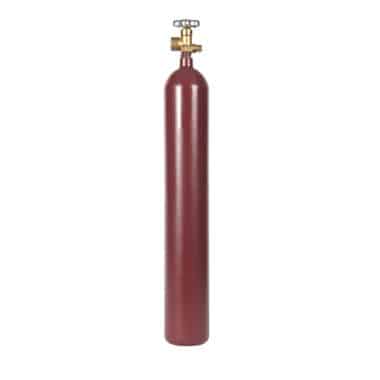
23 Cubic Foot Tanks

FREQUENTLY ASKED QUESTIONS

What does a recertified nitrogen cylinder mean?

Recertified means the cylinder has been hydrostatically tested, inspected, refinished, and re-stamped with a current date by an authorised facility. It is fully compliant for filling and carries the same DOT and TC approval as a new cylinder. The saving over a new cylinder is typically significant with no difference in service life.

What is a 23 cf nitrogen tank used for?

The 23 cf size suits HVAC pressure testing and brazing purges, beverage and coffee dispensing, laboratory work, and any application where the cylinder needs to be carried between jobs. Larger fixed installations usually move up to 40 cf or higher. The gas is identical regardless of cylinder size.

How long does a 23 cf nitrogen cylinder last for HVAC work?

For intermittent pressure testing and brazing purges a 23 cf cylinder commonly covers several service calls. Continuous purging consumes gas far faster than testing, so technicians doing long brazing runs often prefer a 40 cf or larger cylinder. Regulator flow setting is the main variable.

What is the difference between a nitrogen tank and a nitrogen cylinder?

They are the same thing. “Tank” is the everyday term and dominates on Google, while “cylinder” is the industry and DOT term and is more common on Bing and in supplier catalogues. Product listings use the two interchangeably.

Does a nitrogen cylinder need a special regulator?

Yes, it needs a regulator with a CGA580 inlet, the standard inert gas connection. HVAC work usually calls for a high-pressure regulator capable of delivering the elevated test pressures required for pressure testing, which differs from a low-pressure welding flowmeter. The regulator is sold separately.

Can this nitrogen cylinder be refilled with argon or helium instead?

Yes. A CGA580 cylinder is rated for nitrogen, argon, helium, and inert mixes, so the same bottle can be refilled with a different inert gas. Tell the filling supplier which gas is required. The cylinder itself does not need modification.

Where can a nitrogen tank be refilled?

Most welding gas suppliers and industrial gas distributors fill nitrogen cylinders, and because this cylinder is owned outright it can be taken to any of them. Ownership avoids the monthly rental charges attached to leased cylinders and the requirement to return to one supplier.

Is nitrogen dangerous to work with?

Nitrogen is inert, non-flammable, and non-toxic, but it displaces oxygen, so releasing a large quantity in an enclosed unventilated space creates an asphyxiation risk. Work in ventilated areas and never use nitrogen to blow down clothing or confined spaces. The pressure itself is the other hazard, which is why the regulator must be rated correctly.

Does the nitrogen cylinder ship full?

No, it ships empty. Compressed gas cannot be sent by standard carriers under hazardous materials rules, so the cylinder arrives empty with the valve fitted and is filled at a local supplier.

How often does a nitrogen cylinder need requalification?

High-pressure steel cylinders require periodic hydrostatic requalification, typically every five or ten years depending on the cylinder and test method used, with the current date stamped on the shoulder. A recertified cylinder starts from a fresh test date. Filling stations check that stamp before every fill.