
40 Cubic Foot Tanks
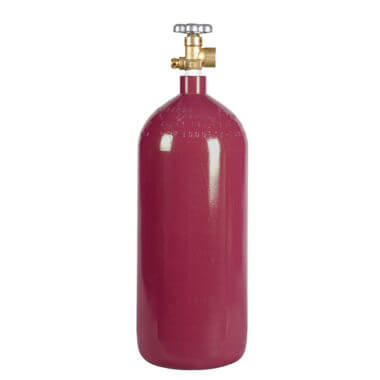
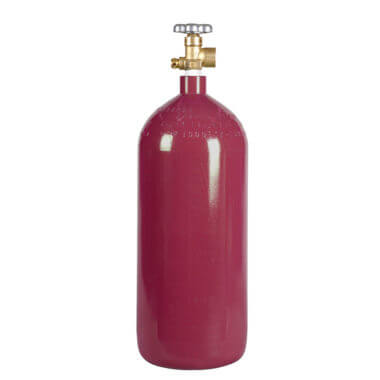
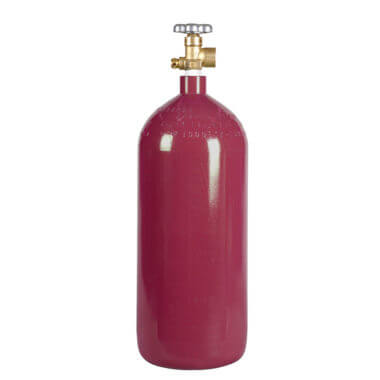
New 40 cuft Steel Argon Cylinder
$123.90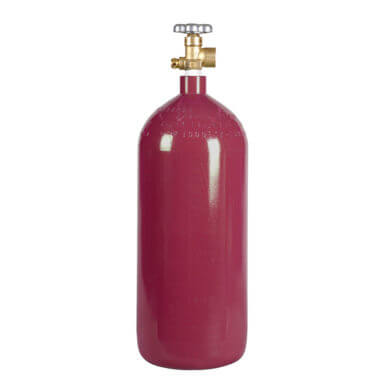


FREQUENTLY ASKED QUESTIONS
▼ How tall is a 40 cf argon tank and what are its dimensions?
A 40 cu ft steel argon cylinder is one of the mid-portable sizes, taller than a 20 cf bottle and shorter than an 80 cf, which is why it fits under most benches and stands upright in a van without laying down. Exact height, diameter and empty weight for this cylinder are listed in the specifications on this page. If a specific clearance matters for your cart or cabinet, check that figure before ordering.
▼ How long does a 40 cf argon tank last while welding?
Run time depends almost entirely on your flow rate, not on the welder. At a typical shielding gas flow of 20 to 25 CFH, a 40 cubic foot argon tank gives roughly 1.5 to 2 hours of continuous arc time. Short TIG passes stretch that considerably, while heavy MIG work or a drafty shop burns through it faster.
▼ Is a 40 cf argon tank big enough for a home or hobby welder?
For occasional home and hobby welding, a 40 cf argon cylinder is usually the sweet spot: enough gas for a full project without the weight of an 80 or 125 cf bottle. Welders who run several hours a week tend to move up a size simply to cut down refill trips. Matching tank size to how often you weld matters more than buying the largest bottle you can carry.
▼ What valve and connection does this argon cylinder use?
It uses a CGA580 valve, the standard outlet for argon and other inert shielding gases. Any CGA580 argon regulator or flowmeter threads on directly, so most existing welding regulators fit without an adapter. Confirm your regulator is CGA580 rather than CGA320, which is CO2 and will not fit.
▼ Does the argon tank arrive filled and ready to weld?
No. All cylinders ship empty for transport safety, so this tank must be filled before first use. Take it to any welding gas supplier, specify argon or the blend you need, and have it filled to the marked service pressure. Once filled and fitted with a CGA580 regulator it is ready for the welder.
▼ Do I own this argon cylinder, or is it a supplier rental?
You own it outright once you buy it, with no rental contract and no recurring fees. Ownership lets you refill or exchange at any qualified gas supplier instead of being tied to one vendor. Keep the purchase record and the test date stamped on the collar to prove ownership at exchange.
▼ Is buying a 40 cf argon tank cheaper than renting one?
For anyone welding regularly, owning usually costs less over time because rental fees continue whether or not the bottle is used. The trade is a higher up-front cost against no ongoing charges. Occasional users who weld a few times a year may still find an exchange or rental arrangement simpler.
▼ Can I run a 75/25 argon CO2 mix in this cylinder for MIG welding?
Yes. The cylinder is rated for inert and mixed gases, so a supplier can fill it with a MIG blend such as 75 percent argon and 25 percent CO2 for steel. The cylinder does not determine the blend, so specify the mix your MIG welder needs at the time of fill. Pure argon remains the choice for TIG and for MIG on aluminum.
▼ Can my local gas supplier refill a 40 cf argon cylinder?
Yes. Because it uses a standard CGA580 valve and meets current DOT requirements, any welding gas supplier can fill it with argon or a compatible inert gas. Suppliers will check the requalification date stamped on the collar before filling and will decline an out-of-date cylinder.
▼ What welding and industrial jobs is a 40 cf argon tank suited for?
It supports TIG, MIG and general fabrication work on steel, stainless and aluminum, where argon and argon blends give a clean, stable arc. The 40 cubic foot capacity suits repair work, small fabrication runs and mobile jobs where the bottle has to move. Production shops welding daily are usually better served by 125 cf or larger.
▼ How does a 40 cf argon cylinder compare to 20 cf and 80 cf?
The 20 cf is the carry-anywhere size with the shortest run time, the 80 cf roughly doubles this tank’s gas at noticeably more weight and height, and the 40 cf sits between them. All three use the same CGA580 connection, so one regulator serves any of them. Choose on how far you have to carry it against how often you want to refill.
▼ When does a steel argon cylinder need requalification?
High-pressure steel cylinders are requalified on a set DOT interval, and the most recent test date is stamped into the collar. A qualified supplier reads that date at every fill and will requalify or refuse an out-of-date cylinder. Buying new starts the clock fresh, so the next requalification is years away.
▼ How should a 40 cf argon tank be transported and stored?
Always move and store it upright and secured, with the valve protection in place and the regulator removed. Never lay a high-pressure cylinder loose in a vehicle or roll it on its base. Store it out of direct heat and away from any ignition source, and keep it upright even when empty.