
CO2 Carbon Dioxide Valves
Gas Cylinder Source supplies CGA-approved CO₂ cylinder valves engineered for safe, compliant use across beverage dispensing, food service, industrial processing, laboratories, welding support, and specialty gas applications. This category includes carbon dioxide valves designed to regulate gas flow, maintain pressure integrity, and ensure correct regulator compatibility for CO₂ service.
Explore Further (click here to read more):
All CO₂ valves offered by Gas Cylinder Source are manufactured to Compressed Gas Association (CGA) specifications and intended for installation on DOT-certified carbon dioxide cylinders. Standard configurations include CGA-320 CO₂ valves, selected based on cylinder size, application, and regional standards. These valve standards prevent cross-connection with incompatible gases and ensure safe system integration.
Carbon dioxide is stored as a liquefied gas under pressure, which places specific demands on valve design and materials. Proper valve selection ensures reliable gas delivery, correct pressure control, and compliance with applicable safety regulations. Gas Cylinder Source supports professionals who replace damaged valves, configure new cylinders, or standardize CO₂ systems across commercial and industrial environments.
All CO₂ valves are intended for professional installation and service in accordance with DOT, CGA, and applicable local codes. Selecting the correct valve is essential for safe operation in beverage, food-grade, and industrial CO₂ applications.
GCS delivers high-quality Sherwood CO2 valves for industrial use, beverage delivery, and other CO2 applications.
Sherwood leads the CO2 compressed-gas valve industry, offering not only precision engineering and innovative design but also extreme durability. Every valve offers an extensive feature set, engineered to deliver long-term performance and reliability.
Gas Cylinder Source is proud to carry an immense variety of high-quality CO2 valves.


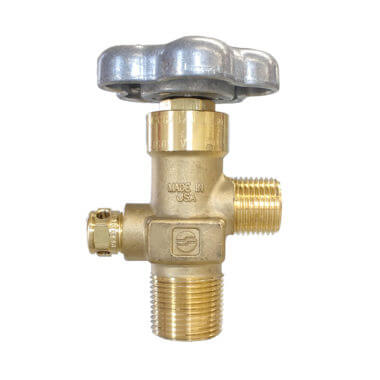
CO2 Carbon Dioxide Valve CGA320 3/4″ NGT – Sherwood
$16.80 – $17.20Price range: $16.80 through $17.20
FREQUENTLY ASKED QUESTIONS
▼ What are CO₂ cylinder valves used for?
CO₂ cylinder valves are used to control the release of carbon dioxide gas from a cylinder and connect it to regulators or dispensing equipment.
They serve as the primary control point between the pressurized CO₂ inside the cylinder and downstream systems. Proper valve operation ensures safe, consistent gas flow.
CO₂ valves are designed specifically for carbon dioxide service.
▼ Are CO₂ valves gas-specific?
Yes, CO₂ valves are gas-specific and must only be used for carbon dioxide service.
Each gas uses designated CGA valve standards to prevent incorrect connections. This helps avoid equipment damage and safety hazards.
Using a non-CO₂ valve on a carbon dioxide cylinder is unsafe and non-compliant.
▼ What CGA valve types are used for CO₂ cylinders?
CO₂ cylinders commonly use CGA-320 valves.
CGA-320 valves are widely used for beverage and food service applications and industrial CO₂ service. Selection depends on the application and regional standards.
Matching the correct CGA valve ensures regulator compatibility and safe operation.
▼ Can a CO₂ valve be replaced?
Yes, CO₂ valves can be replaced if they are damaged, leaking, or out of specification.
Valve replacement must be performed by qualified personnel using approved procedures. Improper installation can compromise cylinder safety.
Replacement valves must meet CGA and DOT requirements for CO₂ service.
▼ Are CO₂ valves compatible with all CO₂ cylinders?
CO₂ valves are compatible only with cylinders designed for carbon dioxide service and that match the specifications.
Thread type, pressure rating, and cylinder design must align with the valve. Compatibility is essential for safe and compliant operation.
Cylinder markings should always be verified before valve installation.
▼ Do CO₂ valves handle liquid and gas phase CO₂?
Yes, CO₂ valves are designed to handle both liquid and gaseous carbon dioxide.
Because CO₂ is stored as a liquefied gas, the valve must accommodate phase changes during withdrawal. This is a key design consideration for CO₂ service.
Proper valve selection ensures stable and predictable gas delivery.
▼ What materials are CO₂ valves made from?
CO₂ valves are typically made from brass or alloys compatible with carbon dioxide service.
Material selection ensures resistance to corrosion, pressure cycling, and wear associated with liquefied gas service. Materials are chosen in accordance with CGA standards.
Valve materials must be suitable for CO₂ environments.
▼ Are CO₂ valves reusable?
CO₂ valves may be reused only if they remain within specification and pass inspection.
Valves exhibiting damage, leakage, or excessive wear should be replaced. Reuse decisions are often made during cylinder recertification.
Safety and compliance take priority over reuse.
▼ How do I choose the correct CO₂ valve?
Choosing the correct CO₂ valve depends on cylinder size, CGA standard, and intended application.
The valve must comply with the cylinder specification and the regulator requirements. Incorrect selection can result in unsafe connections or filling refusal.
When unsure, customers should consult their gas supplier or equipment manufacturer.
▼ Who should buy CO₂ valves from Gas Cylinder Source?
CO₂ valves from Gas Cylinder Source are intended for beverage service providers, restaurants, breweries, industrial operators, laboratories, and gas professionals.
They are suitable for organizations that maintain CO₂ cylinder fleets, replace damaged valves, or configure compliant gas systems.
Gas Cylinder Source supports both individual valve purchases and larger quantity orders for commercial and industrial operations.